NuttX First Impressions: A POSIX RTOS With Real Trade-offs
NuttX is the only embedded RTOS I know that takes POSIX seriously. That fidelity has a cost in footprint and build complexity.
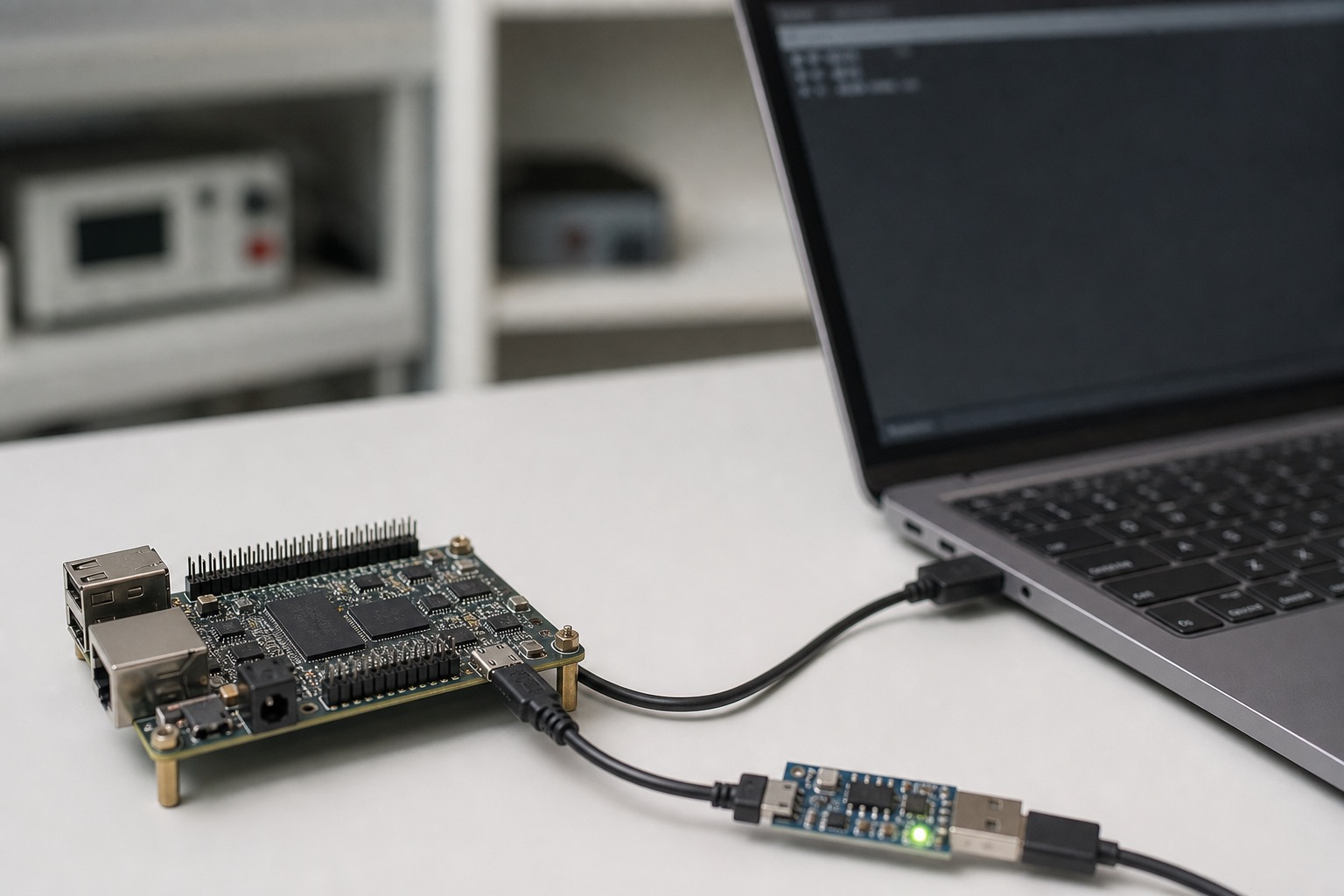
NuttX is the only embedded RTOS I know that takes POSIX seriously. That fidelity has a cost in footprint and build complexity — we evaluated NuttX 12.3 on i.MX RT1064 for a gateway SKU that needed open(), poll(), and real sockets without shipping Linux.
Evaluation setup
Hardware: MIMXRT1064-EVK, 1 MB flash, 512 KB OCRAM, Ethernet + SD. Workload: Modbus TCP gateway, local SQLite cache (yes, on MCU — bounded), HTTPS POST batch upload.
Compared against: Zephyr 3.4 (same silicon), FreeRTOS + lwIP (incumbent on smaller nodes).
Success criteria: POSIX code from desktop prototype runs with <20% rewrite; OTA via MCUboot slot layout; cold boot <3 s.
First impressions (good)
POSIX isn't marketing
int fd = open("/mnt/sd/log.bin", O_RDONLY);
struct pollfd pfd = { .fd = fd, .events = POLLIN };
poll(&pfd, 1, 1000);
This ran. Sockets API matched our Linux tools. Onboarding time for backend engineers dropped — they didn't learn k_mutex first.
NuttShell on serial
nsh for field debug beats re-flashing semihosting builds. dmesg, ifconfig, mount SD — ops team friendly.
Deterministic build with nuttx config system
menuconfig familiar to kernel people. Device drivers under drivers/ follow Linux naming enough to grep productively.
Trade-offs (real)
Footprint
Minimal config still ~350 KB flash vs. ~180 KB Zephyr same features vs. ~120 KB FreeRTOS+lwIP bare.
OCRAM pressure from SQLite page cache — we capped at 32 KB and accepted slower writes.
Build complexity
Out-of-tree app linking requires understanding Makefile + Application.mk + board defconfig. First clean build: 45 minutes CI. Zephyr west: 12 minutes same machine.
Error messages when Kconfig wrong: cryptic until you learn to search NuttX mailing list archives.
Scheduler vs. Zephyr/FreeRTOS
NuttX priority scheduling with POSIX threads — closer to Linux than FreeRTOS. Migration notes from Zephyr vs FreeRTOS apply doubly: read NuttX priority scheme (higher number = higher priority in some APIs — check docs per version).
We lost an afternoon to inverted priority assumption copied from FreeRTOS comments.
Network stack maturity
NuttX bundled network stack worked for Modbus TCP + TLS via mbedTLS port. Throughput 42 Mb/s on EVK — sufficient. UDP packet loss under load test worse than Linux baseline — tuned CONFIG_NET_NACTIVESOCKETS.
Not worse than lwIP on same board; different failure shapes.
OTA angle
Integrated MCUboot swap with NuttX boardctl reset hook. Dual slot on external QSPI flash — see OTA bootloader design for policy; NuttX-specific wrinkle: unmount filesystems before swap or first boot corrupts SD cache journal.
Our sequence:
- Download to staging partition (HTTPS worker thread).
boardctl(BOARDIOC_RESET, ...)after MCUboot mark pending.- Boot new image; self-test; confirm or revert counter.
When we'd pick NuttX again
- Gateway class MCU with existing POSIX codebase
- Team with Linux background, no appetite for Zephyr Kconfig religion
- Product needs multi-process isolation (
forknot on MCU — but separate tasks with MPU regions workable on RT1064)
When we wouldn't
- nRF52-class constrained nodes — Zephyr or bare metal
- Hard real-time kHz control loops — verify worst-case latency; NuttX OK on RT1064 at our rates, not proven for 100 kHz servo
- Tiny team without POSIX maintenance depth — build system tax hurts
Ship/no-ship decision
Gateway SKU shipped NuttX 12.3. Sensor leaf nodes stayed Zephyr. Hybrid fleet ops cost accepted — two update pipelines, one ops runbook.
Six-month field: 2 bricked units (SD journal + abrupt OTA — fixed in 12.4 bump); network uptime 99.7% vs. 99.6% prior FreeRTOS gateway (noise).
What I'd do next
Prototype same gateway on Zephyr native POSIX layer (CONFIG_POSIX_API) — compare rewrite percentage honestly. NuttX won our eval in 2024; Zephyr POSIX improved since.
Document NuttX defconfig diff from EVK default in repo — we spent 3 days re-deriving Ethernet PHY tweaks.
If you're POSIX-curious: budget 2 weeks for build system fluency before judging scheduler. The RTOS is fine; the Makefile is the onboarding boss fight.
Footprint breakdown (EVK config)
Rough size output from our gateway build:
| Component | flash KB |
|---|---|
| NuttX kernel + scheduler | 95 |
| Network stack | 78 |
| mbedTLS (minimal ciphers) | 62 |
| SQLite (amalgamation trimmed) | 48 |
| App + Modbus | 67 |
Zephyr equivalent measured 312 KB total with same features toggled — not apples-to-apples on crypto profile, but directionally NuttX cost is real.
POSIX surface we actually used
Not all of POSIX — fork absent, mmap limited, signals subset. We used: open/read/write, poll, socket, pthread, mqueue. Anything outside that list — verify in NuttX docs before porting Linux library wholesale.
Developer ergonomics vs Zephyr
| Task | NuttX | Zephyr |
|---|---|---|
| Add I2C sensor | drivers/ pattern | devicetree + driver model |
| Shell debug | nsh built-in | CONFIG_SHELL |
| Unit test on host | limited | native_sim strong |
Hybrid fleet ops: two bug databases, two CI pipelines — cost accepted for gateway POSIX win.
What I'd do next

Manish Bookreader
Electronics enthusiast, Embedded Systems Expert, Linux/Networking programmer, and Software Engineer passionate about AI, electronics, books, and cooking.